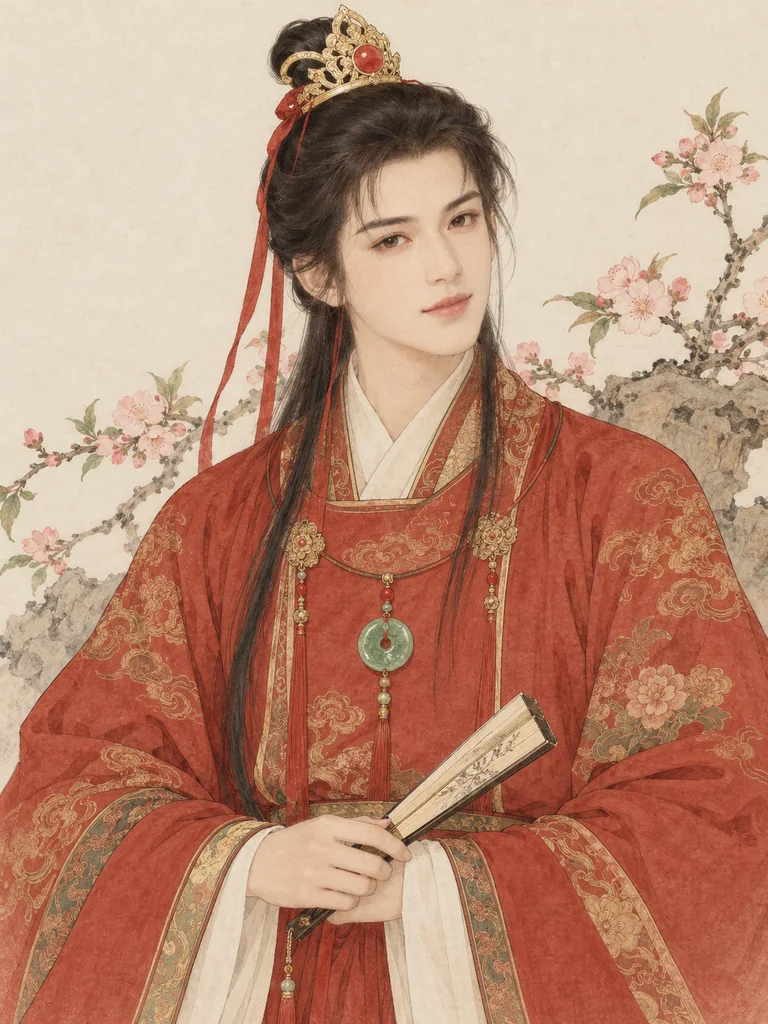
Dream of the Red Chamber · Character guide
Jia Baoyu
贾宝玉
A central young member of the Jia family, surrounded by expectations about his future.
Baoyu is a central figure in the Jia household. His concern for the people around him often conflicts with the successful life expected of him.
affection · curiosity · freedom
Success is not his only measure
Baoyu resists advice about official advancement in Chapter 32. He would rather be understood through affection, poetry and shared experience than reduced to a promising family heir. His disagreement with conventional ambition is central to the novel’s tension between inward value and outward expectations.
Affection still has to learn respect
At Pear Fragrance Court in Chapter 36, Lingguan refuses to perform at his request. Seeing her attachment to Jia Qiang helps him recognise that other people have emotional lives not organised around him. Wanting everyone to respond warmly is different from understanding what each person wants.
Privilege complicates his freedom
The household supports the life in which Baoyu can postpone practical choices. His tenderness is real, but it sits beside dependence on other people’s labour and protection. A careful reading can value his refusal of narrow success while still asking what responsibility should accompany his freedom.
Relationships that reveal the character
Lin Daiyu
Daiyu recognises values that Baoyu struggles to explain within the family’s career expectations.
Xiangling
Xiangling shares an absorbing interest in poetry, but her material circumstances and freedom are very different.
A question to take away
Feeling deeply is a starting point. Find one concrete action that supports the person you care about, rather than relying on the intensity of your feeling.
If this is your quiz match
You find value in affection, shared time and the things that make life feel alive. A neat definition of success may leave you unconvinced. Remember to give your own practical choices some of the care you give other people.
A shared tendency does not give you the character’s biography or decide your future. Use the result to open a question, then read a different perspective if the first description does not fit.