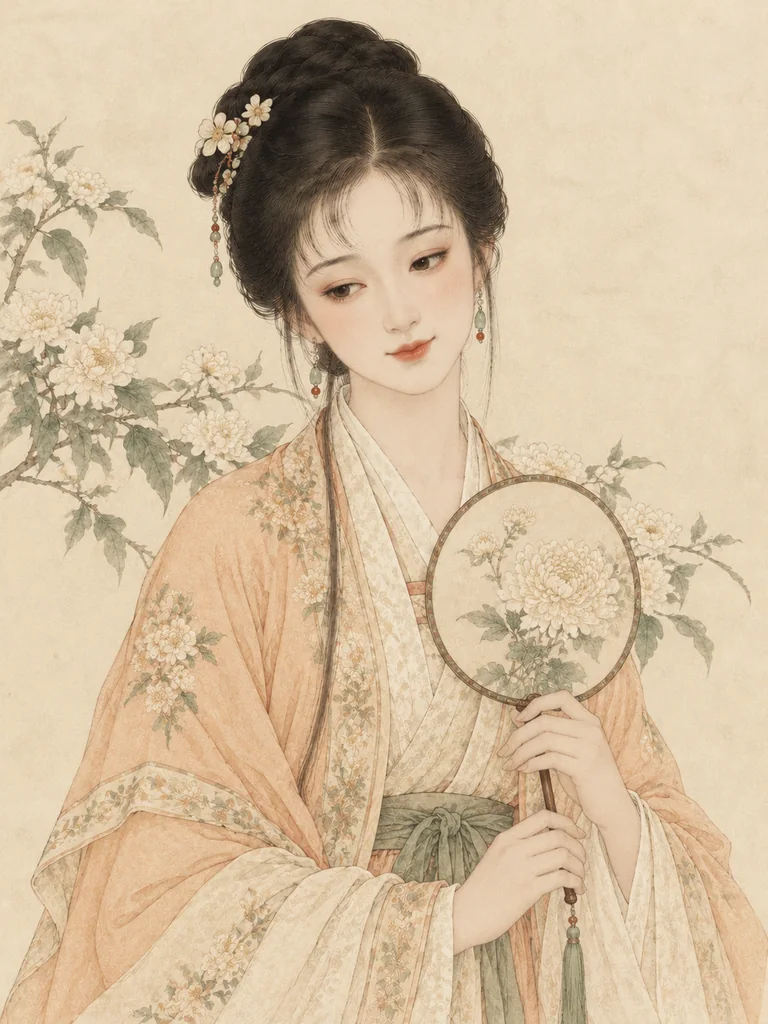
Dream of the Red Chamber · Character guide
Jia Yingchun
贾迎春
One of the Jia sisters, whose quiet wishes are often overridden by others.
Yingchun's quiet disposition makes her a useful figure for considering accommodation, conflict and the cost of leaving wishes unspoken.
gentleness · accommodation · peace
Retreat does not mean ignorance
When Yingchun’s gold ornament is pawned by her nurse in Chapter 73, she avoids pursuing the dispute. She turns toward a book while other people argue. The scene suggests someone who finds escalating conflict frightening or exhausting, rather than someone who cannot understand what has happened.
Support changes what assertion can achieve
Tanchun’s intervention in the same affair highlights differences in their responses to responsibility and confrontation. Yet simply telling Yingchun to become stronger would ignore the support and authority needed to make a boundary effective. Temperament alone cannot explain the unequal outcomes around them.
Gentleness does not cause another person’s cruelty
Her account of harsh treatment after marriage in Chapter 80 must be read within unequal power and family arrangements. The harm is not a moral lesson about being too quiet. Her story deserves sympathy and an account of the conditions that restrict her choices.
Relationships that reveal the character
Jia Tanchun
Tanchun’s intervention in the ornament dispute provides a concrete comparison of two responses to household conflict.
Jia Xichun
Xichun responds to danger by cutting ties, whereas Yingchun more often tries to let a dispute subside.
A question to take away
A preference counts even when saying it feels inconvenient. If a boundary is repeatedly ignored, look for dependable support instead of assuming you must solve the imbalance alone.
If this is your quiz match
You do not need to win every disagreement. Calm relationships matter to you, and people find your gentleness easy to approach. Your preferences still count, even when asking for them feels more troublesome than giving way.
A shared tendency does not give you the character’s biography or decide your future. Use the result to open a question, then read a different perspective if the first description does not fit.