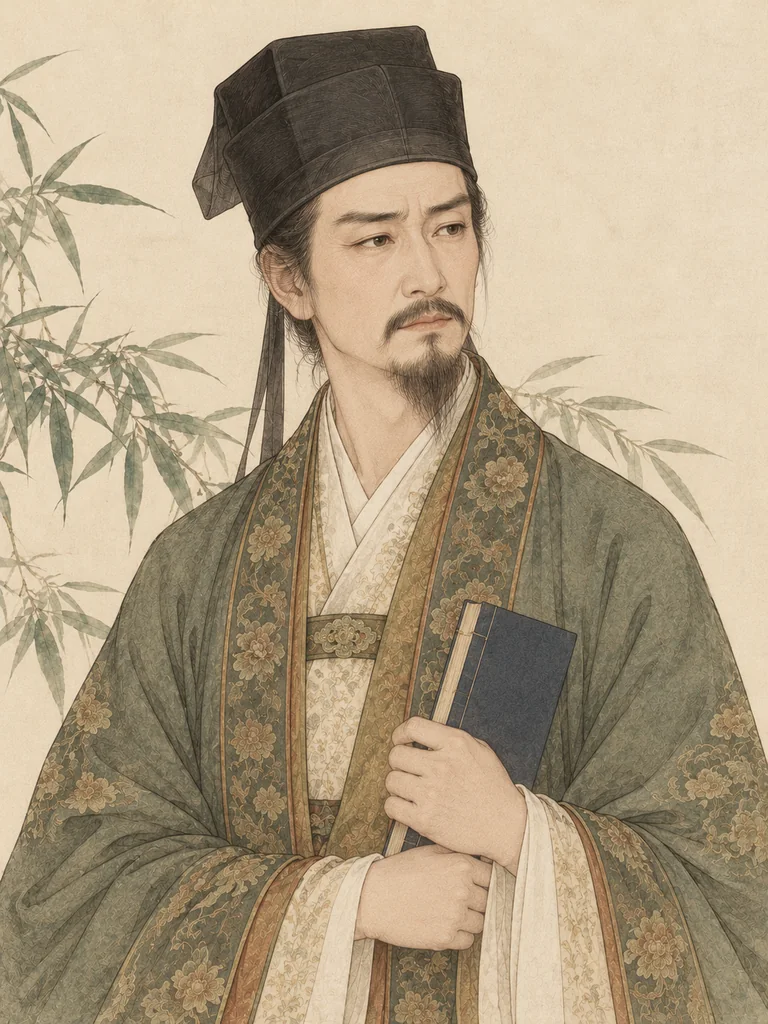
Dream of the Red Chamber · Character guide
Jia Zheng
贾政
Baoyu’s father, strongly concerned with family duty, achievement and accepted standards.
Baoyu's father Jia Zheng represents, in this interpretation, duty, expectations and the reassurance of an established standard.
duty · standards · order
Recognition arrives as a test
During the garden inspection in Chapter 17, Jia Zheng repeatedly assesses Baoyu’s inscriptions and literary judgement. He is not simply unable to perceive talent. Rather, approval is so closely tied to correction and examination that an exchange between father and son becomes a performance to pass.
Anxiety and authority can produce harm
His severe punishment of Baoyu in Chapter 33 brings family reputation, alarming reports and anger together. Understanding the pressures does not excuse violence. The episode should be read as a failure in the exercise of power, rather than proof that harshness is a necessary expression of care.
Standards also organise his imagination
The loyal woman-warrior story in Chapter 78 shows his capacity for emotion and literary appreciation. Those responses remain structured by values he regards as proper. He is more complex than a figure without feeling, but his preferred forms can make other people’s values difficult for him to recognise.
Relationships that reveal the character
Jia Baoyu
Baoyu’s inward priorities expose the limits of understanding a child mainly through performance against a family standard.
Jia Tanchun
Tanchun also values rules, but often asks how existing arrangements should change to address a practical defect.
A question to take away
Explain the purpose of a standard as well as the standard itself. Someone’s latest performance cannot tell you everything about their character, needs or possibilities.
If this is your quiz match
You take commitments and responsibilities seriously. Clear expectations help you act with confidence when life is uncertain. Leave room for a person to be more than their latest performance against a standard.
A shared tendency does not give you the character’s biography or decide your future. Use the result to open a question, then read a different perspective if the first description does not fit.